
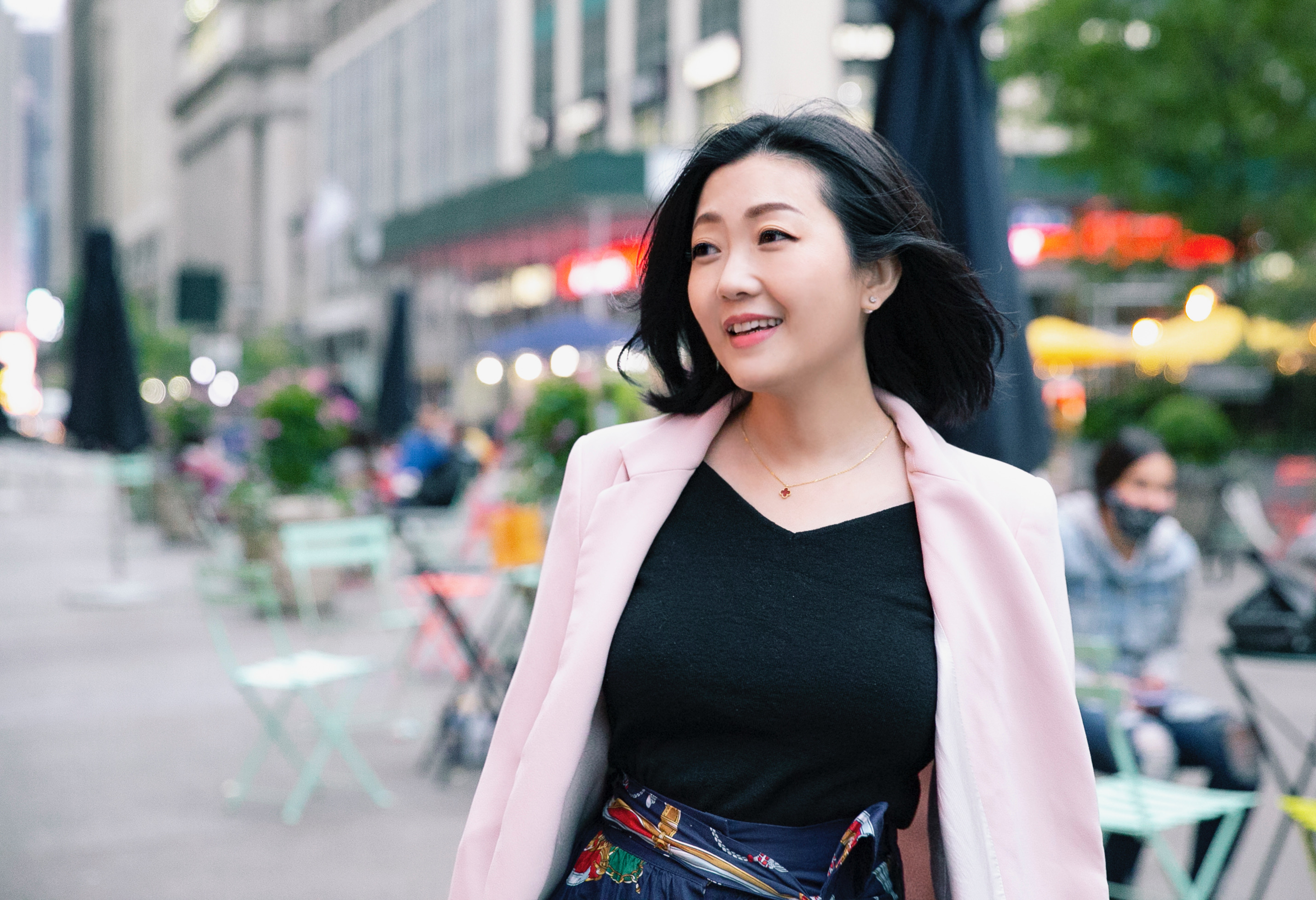
從「小鄧麗君」到一萬人生命裡的聲音導師
從廣州到舊金山,從舞台中央到幕後伯樂——
葛萊美會員、唱片製作人、原創唱作人梅楣,用二十多年時間證明:
會唱歌,不只是技巧,而是一條學會喜歡自己的路。
如果你曾在舊金山灣區聽過一場復古上海老歌音樂會,或在網路上看到一堂溫柔卻犀利的聲樂課,你很可能已經「聽過」她。她是葛萊美會員,是專輯製作人,也是許多專業歌手和聲樂老師背後,那位悄悄推他們一把的導師。在超過二十年的教學與創作裡,她陪伴過一萬多個靈魂,從「不敢出聲」走到「願意被聽見」。
她的名字叫——梅楣。
她的聲音裡,有光
——懷恩專訪梅楣
有些人一開口,世界就柔軟了。梅楣的聲音,就是這樣的一種存在。溫婉中帶著力量,像一盞燈——不耀眼、卻能照亮前路。
一切,從一首《千言萬語》開始
五歲那年,父親從廣州帶回一台錄音機,其中一首鄧麗君的《千言萬語》,點燃了她心裡的火。從此,她的童年被旋律包圍。九歲登台、十二歲加入合唱團受嚴格訓練,十八歲成為職業歌手——那些歌聲裡有少女的夢想,也藏著她對舞台最原始的渴望。
1990年代的廣東樂壇,流行音樂正盛。那段時間,梅楣活躍於各大電視台與舞台現場,與「花城音像」合作發行歌曲《祝你健康快樂》後,開始被更多人認識。她唱過廣告曲,做過音樂製片,也曾在「文藝復興」唱片推出 Hi-Fi 專輯《芒果清清》,那張專輯讓她真正成為廣州歌壇的亮眼新聲。後來,她遠赴馬來西亞發行《幸福感覺》《懷念永遠的鄧麗君》,被媒體親暱地喚作「小鄧麗君」。
音樂人的社會擔當:為弱勢發聲的原創唱作
但對梅楣來說,音樂從來不只是象牙塔裡的光鮮亮麗,而是要承擔社會責任的聲音。她是一位熱情的原創唱作人,創作過大量歌曲,不僅抒發個人情感,更用音樂為弱勢群體發聲。
特別是近期,她為中國已故演員于朦朧量身打造了一系列歌曲,用溫柔而有力的旋律紀念他的藝術人生,喚起公眾對生命與夢想的思考。這些作品展現了她作為音樂人的大愛——「音樂不該只唱給聽眾歡呼,更要為那些被遺忘的角落說話。」
她認為,真正的音樂人應該要有社會擔當。聲音是用來連結世界、療癒他人、為公義發聲的工具。這種價值觀貫穿她的創作與教學,讓她的音樂不僅動聽,更有溫度與力量。
來到舊金山,找到新方向
2011年,她移居舊金山,拜老上海紅歌星梁萍為師。從那時起,她的聲音開始有了新的靈魂——融合東方的婉約與西方的開放,讓人聽見時代的轉角,也聽見她內心的轉變。此後,她一邊舉行個人演唱會,一邊創立「梅楣音樂工作室」,展開系統教學。
很多人不是不會唱,是不敢被聽見
梅楣常說,真正困住一個人的,從來不是音準和節奏,而是心裡那個「不敢出聲」的小孩。她記得有個學生,第一次來上課時幾乎不敢抬頭說話,聲音小到像是怕打擾到空氣。熱身、發聲、練習,一切都按部就班,可到要唱歌的那一刻,對方突然紅了眼眶。梅楣沒有催促,只是讓對方坐下來慢慢說。原來,那是一個從小被要求「安靜懂事」的孩子,長大後,每一次想大聲唱歌,都會莫名覺得「自己不配」。
「當下我就知道,我要教她的,不只是怎麼唱,而是怎麼允許自己被聽見。」她在課後這樣寫在筆記本上。這些年來,她累積了厚厚幾本教學手札,裡面記錄的不只是技術重點,還有學生的故事:有上班族利用下班後的一小時練習,最後勇敢在婚禮上為伴侶獻唱;有原本只想「唱準一點」的學員,後來開啟了自己的翻唱頻道,意外收穫了一群聽眾;也有已經是專業歌手的人,在她的班上卸下「完美人設」,第一次允許自己在歌裡「失控」一次。「當他們開始喜歡自己的聲音,那一刻,比唱對任何一個高音都重要。」她說這句話的時候,語氣是很柔和的,但眼神特別堅定。
從舞台中央,到把聚光燈讓給別人
很多人認識梅楣,是從她的演唱會開始的。在舊金山,她曾連續七年舉辦八場個人音樂會,從《重逢之夜》《不了情》《王昭君》《西子姑娘》《我有一段情》,到以《花樣的年華》《魂縈舊夢》《鳳凰于飛》為名的主題音樂會,場場都像是她人生不同階段的縮影。
每一年,她都會親手為學生們打造一場屬於他們的舞台。有位學生曾經因為喉嚨受傷,一度以為自己再也不能用全力歌唱。那晚,當她站在燈光下唱完最後一個高音,全場掌聲落下來的同時,梅楣在側台靜靜看著,眼裡也泛著光。
「我現在最大的快樂,是看著學生站上台,而我可以退到幕後。」她笑說,自己好像已經從舞台中央慢慢走到了另一個位置——把聚光燈交給一個又一個後來者。這樣的轉變,並不是對表演的告別,而是一種更成熟的選擇:「我當然還是愛唱歌,但如果有一天,學生們比我更亮,那不是搶走我的位置,而是這條路終於走對了。」
《姍姍來遲》:一張專輯,一場心事
2021年,她與多國音樂人共同製作原創專輯《姍姍來遲》。那是一張凝結時間與記憶的作品——古典、民族、老上海三種風格交織,如一部關於她人生的電影。「歌聲,是靈魂與時間的和解。」她這樣形容。這張專輯跨越中、美、法、臺、澳五地錄製,細膩如詩,也讓她再度被國際業界關注,並與葛萊美提名錄音團隊合作。
談到專輯《姍姍來遲》,她的語速會不自覺慢下來。這張專輯從構想到完成,歷時兩年,橫跨中、美、法、臺、澳五地錄製,集結多位國際錄音與演奏陣容,從編曲到錄音都精雕細琢。「那時候正好是疫情最不安的那段時間,很多計畫被迫停下來,人也被困在同一個地方。」她回憶,「於是我開始想,既然世界都慢下來了,那是不是該回頭看一看自己的人生?」
專輯裡有歌寫她早年的廣州記憶,有歌像寫給過去那個不肯認輸的自己,也有歌像是在對未來的相遇輕聲招手。復古國風、老上海情調與現代流行語彙交織在一起,就像她這些年跨越不同文化、不同階段的人生縮影。「有一首歌錄完,我在錄音間裡默默坐了很久。」那一刻她突然明白:原來有些心情,不是說出來就能放下,而是要被唱出來,才能真正離開。
她相信,每個人都值得擁有一首「屬於自己的歌」
除了音樂創作,梅楣還開啟了 Podcast《梅楣・聲之道》,用溫柔的語氣談歌唱與內在對話。她會問:「為什麼童年的一句不要吵,讓你至今都不敢大聲唱?」那樣的提問,不只是對學生,也是對每一個曾壓抑過自己的人。她的「The One 歌唱訓練營」在2023年正式上線,以系統化、心理共感與實用性兼具的教學方式,深受海內外學生歡迎。她強調:「練聲不是把自己逼到完美,而是讓聲音能真誠地存在。」
如今的梅楣,已在舊金山生活十餘年。她依舊定期舉辦音樂會,邀請學生上台一同演唱。她說,那些瞬間,是她最動容的時刻——那些勇敢開口的聲音,比任何舞台燈光都要閃亮。她的故事像首歌,從廣州到舊金山,從舞台到錄音室,從個人歌手到眾人導師。她唱的不是歲月,而是一路走過後仍能發光的心。
在她的人生裡,「聲音」一直不只是工作工具,而是一面鏡子,照見她自己,也照見每一個站在她面前的學生。如果把訪談時間拉回到她剛開始教學的那些年,你會發現,她其實並沒有預料到,自己有一天會成為「一萬多人生命裡,關於聲音的那個轉捩點」。
訪談的最後,她被問到:如果可以對那些還在猶豫、覺得自己「是不是太晚開始」學唱歌的人說一句話,你會說什麼?她沉默了幾秒,笑著回答:「如果你心裡還會因為某一首歌而起雞皮疙瘩,那就永遠不算晚。聲音不會嫌你慢,它只是在等你,願不願意給自己一次機會。」
那一刻,你會突然明白,為什麼那麼多人一輩子忘不了她的課,也忘不了她說話的語氣——因為在梅楣的世界裡,歌唱從來不是一場競賽,而是一場和自己和解的旅程。而她,只是那個在旁邊,靜靜為你提燈的人。
"Mei Mei's story"
Light in Her Voice — A Feature on Mei Mei
From "Little Teresa Teng" to the Voice Mentor of 10,000 Lives
From Guangzhou to San Francisco, from center stage to backstage mentor—
GRAMMY member, record producer, and original singer-songwriter Mei Mei proves with over two decades:
Singing well is not just technique; it's a path to learning to love yourself.
If you've ever attended a retro Shanghai old song concert in the San Francisco Bay Area, or seen a gentle yet incisive vocal lesson online, you've likely already "heard" her.
She is a GRAMMY member, an album producer, and the quiet mentor behind countless professional singers and vocal coaches who gives them that crucial push.
Over more than twenty years of teaching and creation, she has accompanied over 10,000 souls—from "afraid to make a sound" to "willing to be heard."
Her name is—Mei Mei.
Light in Her Voice
Some people, the moment they open their mouths, soften the world. Mei Mei's voice is exactly that kind of presence. Gentle yet powerful, like a lamp—unassuming, yet illuminating the path ahead.
She is a GRAMMY member, record producer, and voice mentor behind countless professional singers. For over twenty years, Mei Mei has used music to guide more than 10,000 students from zero to finding their own voice—from complete beginners too shy to make a sound, to artists and vocal teachers taking the stage. She has personally witnessed their vocal transformations.
"Singing well isn't just technique; it's a path to learning to love yourself," says Mei Mei.
It All Began with One Song, "A Thousand Words and Ten Thousand Phrases"
At age five, her father brought back a tape recorder from Guangzhou, and among the tapes, Teresa Teng's "A Thousand Words and Ten Thousand Phrases" ignited the fire in her heart. From then on, her childhood was enveloped in melody. She started performing at nine, joined the city's Youth Palace choir for rigorous training at twelve, and became a professional singer at eighteen—those early songs carrying a young girl's dreams and her raw longing for the stage.
In the booming 1990s Guangdong music scene, Mei Mei was active across major TV stations and live stages. After collaborating with Flower City Audio & Video to release "Wishing You Health and Happiness," she began gaining recognition. She sang jingles, worked as a music producer, and released the Hi-Fi album Green Mango with Renaissance Records, establishing herself as a standout voice in Guangzhou's music scene. Later, she released Feeling of Happiness and Remembering Teresa Teng Forever in Malaysia, affectionately dubbed "Little Teresa Teng" by the media.
A Musician's Social Responsibility: Giving Voice to the Vulnerable Through Original Songwriting
But for Mei Mei, music has never been just the glamour of an ivory tower—it must bear social responsibility. She is a passionate original singer-songwriter who has created numerous songs, not only expressing personal emotions but also using music to speak for the marginalized.
Recently, she composed a series of songs for the late Chinese actor Yu Menglong, crafting gentle yet powerful melodies to commemorate his artistic life and spark public reflection on life and dreams. These works showcase her compassion as a musician: "Music shouldn't just sing for applause; it must speak for forgotten corners."
She believes true musicians must have social accountability. Voice is a tool to connect the world, heal others, and speak for justice. This value permeates her songwriting and teaching, making her music not just beautiful, but warm and powerful.
Arriving in San Francisco, Finding a New Direction
In 2011, she immigrated to San Francisco and studied under Shanghai old song legend Liang Ping. From then on, her voice gained a new soul—blending Eastern lyricism with Western openness, letting listeners hear the turn of eras and her inner transformation. She continued holding personal concerts while founding "Mei Mei Music Studio" to begin systematic teaching.
"Many People Can't Sing, Not Because They Won't, But Because They Dare Not Be Heard"
Mei Mei often says what truly traps a person isn't pitch or rhythm, but the "afraid to make a sound" child in their heart. She remembers a student who came to her first lesson barely daring to look up, voice so soft it seemed afraid to disturb the air. Everything—warm-ups, phonation, exercises—went smoothly until it was time to sing, when tears suddenly welled up. Mei Mei didn't rush her but sat her down to talk. It turned out this was a child raised to be "quiet and sensible," who as an adult felt "unworthy" every time they tried to sing loudly.
"Right then, I knew I had to teach not just how to sing, but how to allow oneself to be heard," she wrote in her notebook afterward. Over the years, she accumulated thick stacks of teaching notes—not just technical points, but students' stories: office workers practicing an hour after work and bravely singing at weddings; students who just wanted to "sing in tune" launching cover channels and gaining fans; even professional singers who shed their "perfect" personas to "lose control" in song for the first time.
"When they start to love their own voice, that's more important than nailing any high note," she says softly, her eyes resolute.
From Center Stage to Passing the Spotlight
Many know Mei Mei from her concerts. In San Francisco, she held eight personal concerts over seven consecutive years—from Reunion Night, Unfinished Love, Wang Zhaojun, West Lake Girl, I Have a Relationship, to Flowery Years, Soul Haunted by Old Dreams, Phoenix Flying Together—each like a snapshot of her life's chapters.
Every year, she personally crafts a stage just for her students. One student, who due to vocal injury thought she could never belt again, stood under the lights and nailed the final high note. As applause roared, Mei Mei watched quietly from the wings, eyes glistening.
"My greatest joy now is seeing students on stage while I step backstage," she laughs. "If one day they're brighter than me, that's not stealing my spot—it's proof we've walked the right path."
Long Overdue: An Album, A Heart's Story
In 2021, she collaborated with musicians from multiple countries on her original album Long Overdue. This work condenses time and memory—interweaving classical, folk, and old Shanghai styles like a film of her life. "Voice is the reconciliation of soul and time," she describes. Recorded across China, the US, France, Taiwan, and Australia, its poetic finesse drew international attention and involved GRAMMY-nominated recording teams.
Speaking of Long Overdue, her pace slows unconsciously. From conception to completion, it took two years across five countries, assembling international recording and performance talent with meticulous arrangement and recording. "That was the most uncertain pandemic period—plans halted, people trapped in place," she recalls. "So I thought, since the world slowed, maybe I should look back at my own life?"
Songs recall her early Guangzhou days, speak to the unrelenting younger self, or beckon future encounters. Retro guofeng, old Shanghai romance, and modern pop blend, mirroring her cross-cultural journey. "After one song, I sat silently in the booth for a long time." That moment she realized: some feelings can't be spoken away—they must be sung to truly leave.
She Believes Everyone Deserves "Their Own Song"
Beyond music creation, Mei Mei launched the podcast Mei Mei - The Way of Voice, gently exploring singing and inner dialogue. She asks: "Why does a childhood 'don't make noise' still keep you from singing loudly today?" These questions reach beyond students to anyone who's silenced themselves. Her "The One Singing Training Camp" launched in 2023, blending systematic, empathetic, and practical teaching, beloved by students worldwide. She stresses: "Practice isn't about perfection; it's letting your voice exist authentically."
Now in San Francisco for over a decade, she still holds regular concerts, inviting students onstage. "Those moments move me most—the brave voices shining brighter than any stage lights." Her story is a song—from Guangzhou to San Francisco, stage to studio, solo artist to mentor. She doesn't sing years; she sings a heart that still glows after the journey.
In her life, "voice" is more than a tool—it's a mirror reflecting herself and every student before her. Looking back to her early teaching days, she never imagined becoming "the turning point in 10,000+ lives about voice."
At the interview's end, asked what she'd say to those hesitating, thinking "Am I too late to learn singing?": She pauses, then smiles:
"If a song still gives you chills, it's never too late. Your voice won't rush you; it's just waiting—will you give yourself the chance?"
In that moment, you understand why so many never forget her lessons or her tone—because in Mei Mei's world, singing isn't a competition, but a journey of self-reconciliation. And she? Just the one quietly holding the lantern beside you.

加入《梅楣音樂坊》